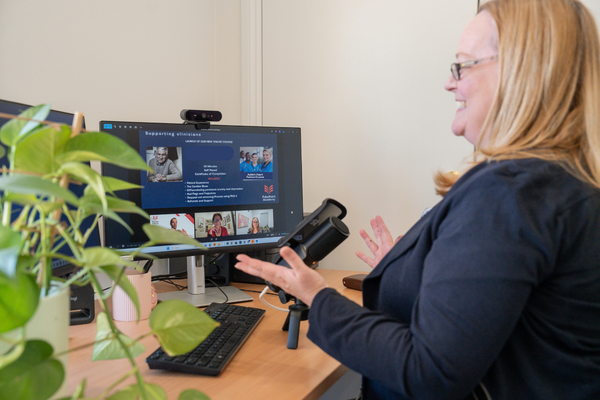
This Women's Heart Health Practice Intensive is the first of its kind, specifically designed to help you see women’s cardiovascular risk differently, act earlier, communicate more effectively, and create meaningful change in day-to-day practice.

At its core is a simple but powerful shift: you can’t treat what you’re not looking for.

The Women's Heart Health Practice Intensive begins May!

The first live webinar is on Tuesday 19 May, 5.30pm (AEST).

  • 00 Days
  • 00 Hours
  • 00 Minutes
  • 00 Seconds

The Women's Heart Health Practice Intensive will run over five weeks, covering a new topic each week.

Dr Jennifer Coller will host weekly, short live webinars. Together, the topics will explore the clinical and system factors that continue to contribute to underrecognition, delayed diagnosis and poorer heart health outcomes for women.

  • The North Star: Awareness of Cardiovascular Risk and High Quality Cardiovascular Care in Women across the Life Span
    Reframing how clinicians see cardiovascular risk in women across pregnancy, menopause and ageing, with a focus on earlier recognition and proactive care.
    Tue 19 May, 5.30pm (AEST)

  • Reality Gaps & Advocacy: Why the System Doesn't Deliver the North Star.
    Understanding why women’s heart health care still falls short, including bias, delayed diagnosis, referral barriers and the clinician’s role in advocating within imperfect systems.
    Tue 26 May, 5.30pm (AEST)

  • Patient-Centred Communication: Communicating with Women to Achieve Better Heart Health Outcomes
    Exploring how women describe symptoms, how communication influences outcomes, and how clinicians can build trust, clarity and adherence in consultations.
    Tue 2 June, 5.30pm (AEST)

  • Clinician Sustainability: Acknowledging Moral Distress and Reducing Risk of Burnout in Providing Cardiovascular Care for Women
    Addressing the emotional load of missed diagnoses, system failure and moral distress, with practical strategies to support long-term effectiveness and resilience.
    Tue 9 June, 5.30pm (AEST)

  • Judgement, Prioritisation & Impact: Where Can We Apply Our Effort for Maximum Change?
    Translating insight into action through better clinical judgement, smarter prioritisation and practical system changes that improve care for women.
    Tue 16 June, 5.30pm (AEST)

Instructor(s)

This Intensive is ideal for clinicians and health professionals who want to strengthen their approach to women’s cardiovascular health and deliver more proactive, equitable, patient-centred care.

  • Nurses

    working in cardiac rehabilitation, complex care, community, or outpatient settings

  • General Practitioners

    with an interest in chronic and cardiovascular care

  • Allied Health Professionals

    involved in team-based care

  • Nurse Practitioners

What's included?

Enrolling into the Women's Heart Health Practice Intensive will include:

  • Weekly webinars

    A 30-35 minute weekly webinar for five consecutive weeks, hosted on Webinar Ninja, led by Dr Jennifer Coller, alongside guest speakers.

    Each session will be recorded for flexible access. Live attendance is optional.

  • Workbook

    A dedicated digital workbook to download that includes weekly reflective practice prompts. The workbook is:

    • A thinking tool, not homework

    • A place for notes, sketches, and reflection.

  • Online community

    Access to a dedicated online community space for all Women's Heart Health Practice Intensive participants.

    Engage in the online community discussion to share resources, discuss challenges, and reduce professional isolation.

    Participation is optional.

What makes this different from an online course?

The Women's Heart Health Practice Intensive is a facilitated practice-change program, NOT a self-paced course.

  • Participants will be supported to:

  • Apply learning directly to their own clinical context.

  • Reflect on clinical decision-making and areas of uncertainty.

  • Explore models of care that support sustainability.

  • Consider equity, access, and system constraints in everyday practice.

  • The pace is deliberate and supportive. The goal is not to rush or overwhelm, but to create learning that can be realistically integrated into everyday clinical practice.

  • N.B. It is expected that most participants will invest approximately 45–75 minutes per week to the Practice Intensive. The structure is intentionally designed to fit around real clinical workloads.